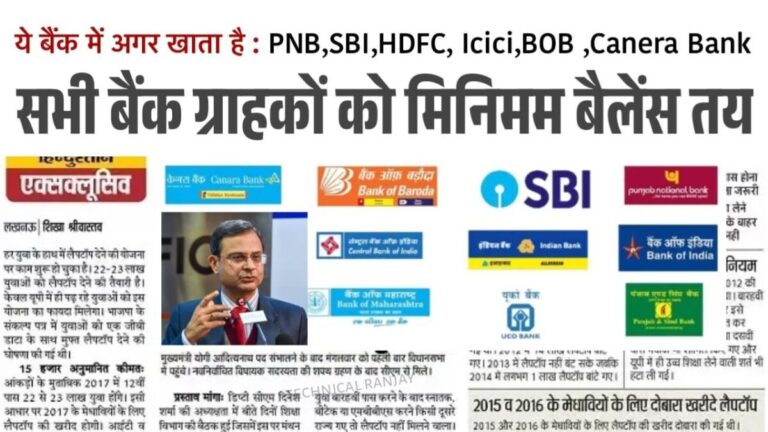
The Reserve Bank of India (RBI) and Ministry of Finance have implemented new banking rules from 2025 that will directly impact your savings account, minimum balance requirements, transaction limits, and banking charges. These comprehensive changes are designed to benefit customers while ensuring better banking practices across all financial institutions.
Banking customers across India can now expect reduced penalty charges, enhanced digital payment benefits, and special provisions for senior citizens. Moreover, these regulations create a more transparent and customer-friendly banking environment nationwide.
New Minimum Balance Rules for Savings Accounts
Starting from 2025, all banks have been given the freedom to set minimum balance limits for their customers. However, the RBI has established a mandatory minimum standard between ₹500 to ₹1000.
If your account fails to maintain this balance for three consecutive months, banks can only charge a penalty fee between ₹50 to ₹200. Previously, this charge could go up to ₹600, which has now been significantly reduced.
Therefore, customers will experience substantial savings on banking penalties while maintaining greater flexibility in account management.
Interest on Zero Balance Accounts
Jan Dhan and Basic Savings Accounts (Zero Balance Accounts) will now earn interest. The RBI has directed banks to provide at least 3.5% annual interest on all zero balance accounts.
This rule became effective from January 1, 2025, ensuring that even basic account holders benefit from their deposits. Additionally, this change promotes financial inclusion for millions of Indian customers.
New ATM Withdrawal Regulations
The updated ATM transaction policy offers enhanced benefits for customers across different city categories.
- 5 free transactions monthly in metro cities
- 7 free transactions monthly in non-metro cities
After exceeding these limits, banks can charge a maximum of ₹18 for cash withdrawals and ₹8 for balance inquiries. These charges were previously capped at ₹21.
Zero Charges on Digital Payments and UPI Transactions
The RBI has clarified that no charges will be levied on UPI or digital payments. Whether you transfer money through Google Pay, PhonePe, or Paytm, no fees will apply.
This regulation applies to all banks and encourages the adoption of digital payment methods across the country. Furthermore, this policy supports India’s vision of becoming a cashless economy.
Relief for Senior Citizens and Women Account Holders
From 2025, individuals above 60 years and women will receive additional interest rate benefits that recognize their financial needs.
- Senior citizens receive up to 0.75% higher interest rates
- Women account holders get an additional 0.25% interest on savings accounts
These provisions demonstrate the government’s commitment to inclusive banking practices and social welfare.
Enhanced Auto-Debit Alert System
The RBI has implemented new security measures for auto-debit transactions. Banks must send SMS or email alerts 24 hours before any EMI or subscription deduction.
Customers can stop these transactions by replying “STOP” to the alert message, providing greater control over automatic payments. However, this feature requires prior registration with your bank.
New Balance Check Methods
Customers can now check their bank balance without internet connectivity using the unified USSD code. Simply dial *99# from any mobile network.
This service works across all banks and mobile networks, allowing balance checks, mini statements, and fund transfers. Additionally, the service operates 24/7 without any downtime restrictions.
Stricter Dormant Account Regulations
Accounts with no transactions for 12 months will be declared dormant. However, banks must now notify customers via SMS or email 90 days in advance, allowing them to reactivate their accounts.
This proactive approach helps customers maintain active banking relationships and avoid account complications. Moreover, reactivation processes have been simplified under the new guidelines.
Daily Interest Calculation Method
Savings account interest will now be calculated based on daily balance rather than monthly or quarterly averages. This change benefits small account holders by providing more accurate interest calculations.
The new method ensures fair interest distribution regardless of when deposits or withdrawals occur during the month. Therefore, customers earn maximum returns on their savings.
Multi-Bank Balance Linking System
The RBI has launched “One Account View” feature in 2025. Customers can now view all their bank account balances through a single app or portal.
This service operates under the Account Aggregator Framework, providing consolidated financial information across multiple banking relationships. Furthermore, this system ensures complete data privacy and security.
Impact on Banking Customers
These regulatory changes significantly improve the banking experience for millions of customers. The reduced penalty charges and enhanced digital payment infrastructure support India’s push toward a cashless economy.
Moreover, the special provisions for senior citizens and women demonstrate the government’s commitment to inclusive banking practices. Additionally, these changes create better transparency in banking operations.
The new rules establish a more customer-friendly banking environment nationwide. Banks must now provide clearer communication about charges, better interest rates for basic accounts, and improved digital services.
Conclusion
The 2025 banking regulations represent a customer-centric approach to financial services. While minimum balance requirements and ATM charges have been reduced, zero balance accounts and digital payments have received significant support through interest benefits and security features.
Whether your account is with a government or private bank, understanding these rules is essential to maximize your financial benefits. These changes ensure better protection for your money while encouraging digital adoption in India’s banking sector.
Frequently Asked Questions
What is the new minimum balance requirement for savings accounts in 2025?
Banks can set minimum balance limits between ₹500 to ₹1000 as per RBI guidelines. Penalty charges for non-maintenance have been reduced from ₹600 to a maximum of ₹200.
Do zero balance accounts earn interest under the new rules?
Yes, all zero balance accounts including Jan Dhan and Basic Savings Accounts now earn a minimum of 3.5% annual interest as mandated by the RBI from January 1, 2025.
How many free ATM transactions are allowed monthly?
Customers get 5 free ATM transactions in metro cities and 7 free transactions in non-metro cities. Additional transactions cost ₹18 for withdrawals and ₹8 for balance inquiries.
Are there any charges for UPI and digital payments?
No, the RBI has confirmed that no charges will be levied on UPI transactions or digital payments through any platform including Google Pay, PhonePe, or Paytm.
What special benefits do senior citizens get under new banking rules?
Senior citizens above 60 years receive up to 0.75% additional interest on their savings accounts, while women account holders get an extra 0.25% interest benefit.
